On this page:


A shopper opens ChatGPT and types: “Best used SUV under $30K near me, good for a family of five.” A few seconds later, they have a shortlist of vehicles and dealerships. Your store had the perfect unit on the lot. It just wasn’t on the list. Welcome to AI car shopping.
Maybe it was still in recon. Maybe it was online with zero photos. Maybe it was live with a handful of old vendor shots that didn’t show the third row. Either way, the shopper never saw it, and they never knew you had it.
This isn’t a future scenario. Cox Automotive’s 2026 AI in Auto Retail Tracker found that 63% of in-market shoppers plan to use AI for their next vehicle purchase, but only 29% of dealers have started adapting to AI-powered search. That gap is an opportunity for the dealers who move first.
The good news: most of what makes inventory visible to AI shoppers is the same thing that makes it sell everywhere else. Get vehicles online fast, make every listing complete, and keep it consistent.
How AI Car Shopping Changes the Path to Your VDP
For years, the path was predictable: a shopper searched Google or a marketplace, filtered results, and clicked into a VDP. AI assistants compress that journey. Shoppers describe what they need in plain language, and the assistant does the narrowing for them.
That shift is already measurable. In Cox Automotive’s research, 36% of shoppers named AI tools as a vehicle research source, nearly matching the 38% who named automotive websites. Large retailers have noticed. CarMax launched an app inside ChatGPT in February 2026 that lets shoppers search its live inventory of more than 45,000 vehicles conversationally.
Exactly how each AI tool chooses what to show is still evolving, and it will keep changing. But a few things are consistent: these tools pull from listings, dealer websites, marketplaces, and reviews. Shoppers also use them to pressure-test listings, asking follow-up questions about condition, features, and trim before they ever contact a store.
You can’t control the algorithm. You can control whether your inventory is online, complete, and accurate when a shopper (or their AI assistant) comes looking.
AI Can’t Recommend a Car That Isn’t Online
Every day a vehicle sits between “acquired” and “live” is a day it can’t be found anywhere: not on your website, not on marketplaces, and not by an AI assistant. Time-to-market has always cost dealers holding costs and missed leads. AI car shopping raises the stakes, because shoppers are getting answers faster and moving on sooner.
The bottleneck is rarely one big problem. It’s a car waiting on photos, photos waiting on edits, or a unit nobody realized was still missing media. (We mapped these out in What Happens Between ‘Car Acquired’ and ‘Car Online’?) That’s what Autoport® is built to fix. It gives your team one place to manage vehicle media from capture to publish, and the VIN Status Tracker shows where every vehicle stands so nothing quietly stalls.
Dealers who bring merchandising in-house with Dealer Image Pro have cut days off their time-to-market (see more results):
| Dealer | Before | Now | Days saved |
|---|---|---|---|
| Bob Ruth Ford (single rooftop) | 4 days, 3 hrs | 1 day, 3 hrs | 3 |
| ZT Automotive (group) | 11 days, 4 hrs | 5 days, 21 hrs | 5 |
| The Niello Company (group) | 10 days, 5 hrs | 6 days, 4 hrs | 4 |
Each of those days is another day your inventory is available to every shopper, however they search.
Complete Listings Answer the Follow-Up Questions
AI shoppers ask sharper questions than people typing into a search bar. Does it have a third row? What does the back seat look like? Is there wear on the steering wheel? Buyer guides now encourage shoppers to use AI to sanity-check listings, pointing out that a listing can claim “excellent condition” while leaving out worn tires or missing safety features.
A thin listing can’t hold up to that kind of scrutiny. A complete one can. That means the same thorough set of photos on every unit, interior views that let shoppers explore the cabin, and accurate details that match what’s on the lot.
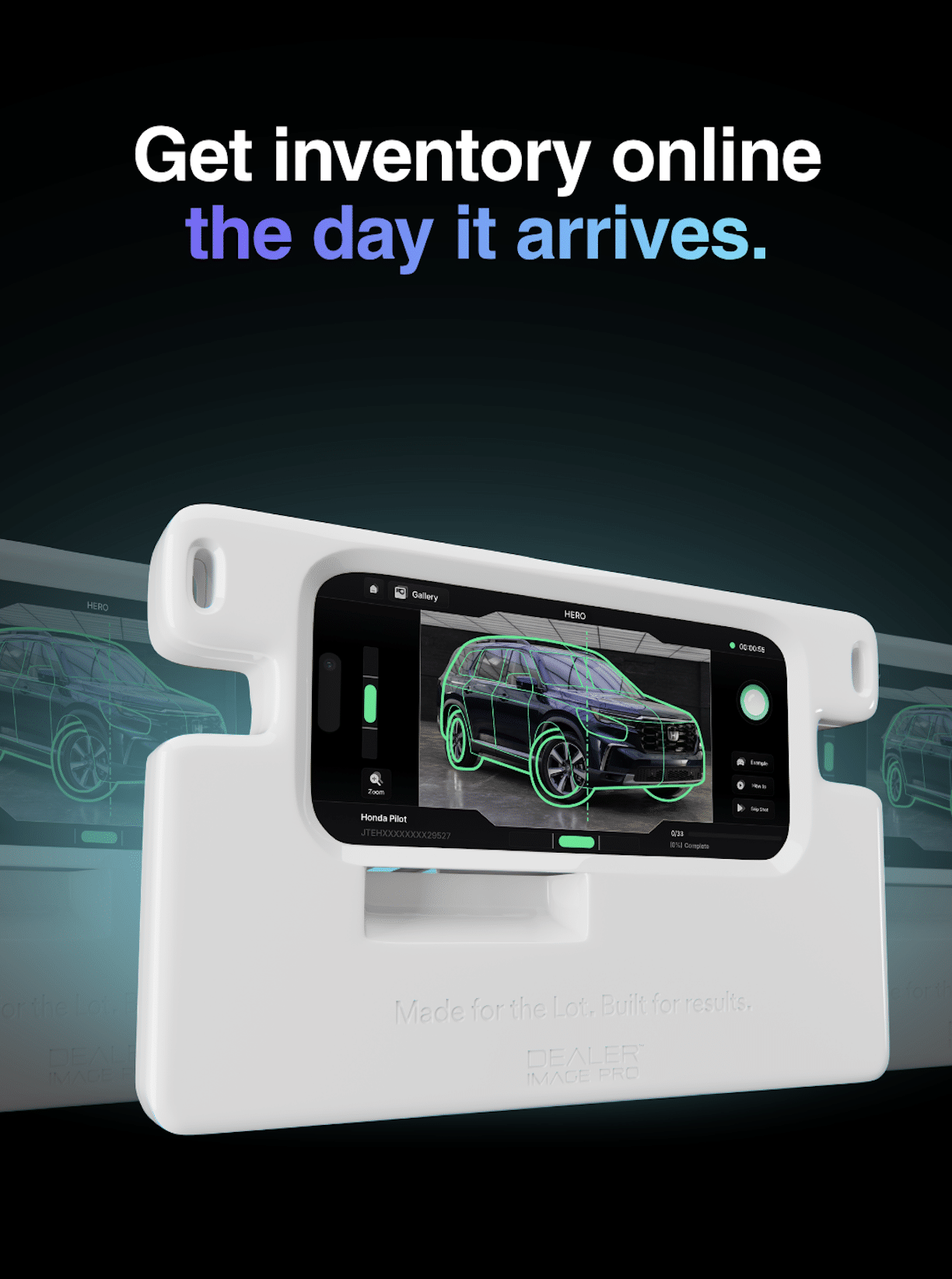
- Photo Assistant™ wireframes guide whoever is shooting through the same angles, in the same order, on every vehicle, so no listing goes live missing key shots.
- Interior 360 cameras let shoppers look around the cabin, answering seating, space, and condition questions before they ask.
- Custom window stickers keep features and details consistent between the lot and the VDP.
When AI car shopping sends someone to your VDP, the listing should confirm what they hoped was true, not raise new questions. (For the most common ways listings fall short, see Common Vehicle Photography Mistakes That Hurt VDP Performance.)
Old Photos Are an Invisible Problem
Some of the weakest listings on your site don’t look like problems at all. During onboarding, inventory transitions, or after switching vendors, many vehicles still carry older photos through the IMS. Those images may meet the photo count, but they often don’t reflect your current standards, branding, or presentation.
Worse, they can hide vehicles from your own team. When enough legacy photos are attached, a unit can look “done” in your workflow, even though it still needs a fresh, consistent photo set.
That’s why we built the IMS Photos Threshold in Autoport®. When enabled, Autoport® treats inbound IMS photo counts as zero, so vehicles with older images show up in the Without Photos workflow. Your photographers get a reliable daily list of what actually needs attention, and outdated media stops slipping through to shoppers.
Measure What’s Working
As shoppers arrive from new places, it gets harder to know which listings are doing the work. Gut feel isn’t enough when you’re deciding where to spend time and money.
Dealer Image Pro’s Google Analytics 4 integration lets you see how shoppers engage with your vehicle media: which photos, videos, and 360s hold attention, and which listings may need a reshoot. Pair that with your traffic sources, and you’ll start to see how shoppers coming from AI car shopping tools behave once they land on your site.
A 15-Minute AI Visibility Check
You don’t need a new strategy to get started. Run this quick check this week:
- Ask like a shopper. Open ChatGPT, Gemini, or Google’s AI search and ask what your customers ask: “used trucks near [your city],” “best dealership for [your brand] near me,” or a specific model you have in stock. Note whether your store or your inventory shows up, and whether the information is accurate.
- Count the cars that aren’t online. How many units are on the lot but not live on your site right now? (Here’s why 48 hours is already too long.)
- Find the stale listings. How many live vehicles still have old vendor photos, stock images, or an incomplete photo set?
- Check one VDP like a skeptic. Pick a random used vehicle. Could a shopper answer their top three questions from the photos alone?
- Know your number. What is your average time from acquisition to online? If you don’t know, that’s the first thing to fix.
AI Car Shopping FAQ
What is AI car shopping?
AI car shopping is when buyers use AI assistants like ChatGPT, Gemini, or Google’s AI search to research vehicles, compare options, and find dealerships. Instead of filtering search results themselves, shoppers describe what they want in plain language and the assistant builds a shortlist.
How many car shoppers use AI?
It’s growing quickly. Cox Automotive’s 2026 research found that 63% of in-market shoppers plan to use AI for their next vehicle purchase, and 36% already name AI tools as a research source.
How can my dealership show up in AI car shopping results?
No one controls exactly how AI tools choose results, and their methods keep changing. What you can control is getting vehicles online quickly, keeping every listing complete and accurate, and making sure your dealership information is correct wherever it appears.
Do vehicle photos matter if a shopper starts with AI?
Yes. AI can point a shopper to your VDP, but the photos still have to earn the lead. Shoppers increasingly use AI to double-check listings, so missing angles or outdated photos are more likely to send them elsewhere.
How fast should a vehicle go online after acquisition?
As fast as possible. Every day a car isn’t listed is a day it can’t be found by any shopper or AI tool. Even 48 hours is longer than it should be, and Dealer Image Pro customers have cut three to five days off their time-to-market.
Do we need new technology to prepare for AI car shopping?
Not necessarily. The biggest gains usually come from fixing the basics: a consistent photo process, clear ownership of each step, and visibility into which vehicles are stuck. Tools like Autoport® and Photo Assistant™ are built to make that process faster and repeatable.
The Fundamentals Still Win
AI car shopping is changing where the buying journey starts. It isn’t changing what wins once a shopper finds you. Vehicles that get online fast, with complete and consistent media, are ready for every channel, including the ones that didn’t exist two years ago.
Want to see how your inventory stacks up? Book a demo
FAQs
What is AI car shopping?
AI car shopping is when buyers use AI assistants like ChatGPT, Gemini, or Google’s AI search to research vehicles, compare options, and find dealerships. Instead of filtering search results themselves, shoppers describe what they want in plain language and the assistant builds a shortlist.
How many car shoppers use AI?
It’s growing quickly. Cox Automotive’s 2026 research found that 63% of in-market shoppers plan to use AI for their next vehicle purchase, and 36% already name AI tools as a research source.
Do vehicle photos matter if a shopper starts with AI?
Yes. AI can point a shopper to your VDP, but the photos still have to earn the lead. Shoppers increasingly use AI to double-check listings, so missing angles or outdated photos are more likely to send them elsewhere.
How fast should a vehicle go online after acquisition?
As fast as possible. Every day a car isn’t listed is a day it can’t be found by any shopper or AI tool. Even 48 hours is longer than it should be, and Dealer Image Pro customers have cut three to five days off their time-to-market.